Secure PDF distribution with a cloud API
Every PDF distribution pipeline eventually hits the same wall. The pipeline itself is fine — the store delivers the purchase, the portal serves the download, the mailer sends the attachment — and at the exact moment it succeeds, control ends. The recipient has a file, the file forwards, and nothing in your pipeline knows or can do anything about it. Securing PDF distribution through a cloud API means changing what the pipeline delivers: protected access instead of the file, so the thing you distribute stays connected to the policy you set.
The shape of the change
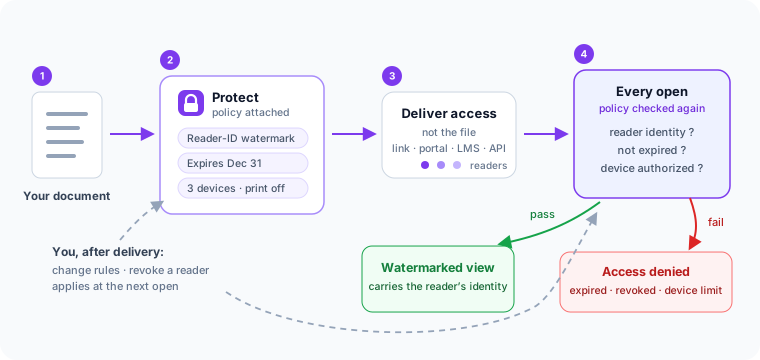
In a conventional pipeline, your system hands the recipient bytes. In a protected pipeline, it makes two API calls and hands the recipient a link:
- At ingestion:
POST /api/v1/docs/protectwhen the PDF enters your system, attaching the policy — reader watermarking, expiry, device limits, print and copy permissions — and receiving distribution links in return. - At fulfillment: grant access to the named recipient at the moment your pipeline would previously have attached the file. The recipient opens the link in the controlled viewer; the policy is checked at that open and every one after it.
Everything downstream of those calls — the email template, the portal page, the order confirmation — keeps working as before, except the deliverable is now revocable, expiring, watermarked access rather than an unaccountable copy.
Three distribution patterns
Purchase fulfillment. A store or marketplace selling reports, standards or ebooks grants access when payment clears. The buyer's access carries their identity on every page; refund or chargeback events map to revocation. The one-file-per-customer generation step disappears — one protected document serves every buyer, each with their own mark.
Portal delivery. A member or customer portal replaces its raw download links with protected ones. Entitlement logic stays exactly where it is — the portal still decides who sees which document — but a link shared outside the portal now leads to an identity check instead of a free copy.
Outbound batches. Investor updates, partner price lists, syndicated research: the batch job protects once, grants per recipient, and sends links through the same mailer as before. The morning after, the access log answers the question batch email never could — who actually opened it, and on which device.
What the cloud part buys you — and costs you
Because protection is a service call rather than installed infrastructure, there is nothing to host, patch or scale alongside your pipeline, and the policy check that makes revocation and expiry work happens against a service that is already there. The honest cost: opening protected content requires reaching that service, and policy changes govern availability — offline reading exists as a deliberate, time-boxed policy window rather than an accident of possession. Teams weighing that trade-off against running their own infrastructure should read the cloud versus on-premise comparison — it takes the on-premise case seriously.
What it doesn't solve
Protected distribution controls the document after delivery; it doesn't make content un-photographable, and it doesn't fix entitlement bugs upstream of the grant call — if your pipeline grants the wrong person, the API will faithfully protect their access. The realistic claim is narrower and still transformative: every distributed PDF stays identified, expirable, revocable and logged for its whole life. The plain-language guide to stopping PDF sharing covers what the recipient-side controls really do and don't do.
Building it
Start with one document class — the one whose leak would sting most — and run it through protect-grant-deliver on the free tier, which includes the API. The developer overview and OpenAPI reference (opens in a new tab) cover authentication and schemas; the API security-automation guide covers the revocation and audit loops you'll want around the pipeline once it's live.